Newsroom
What Is Amplitude Balance and Phase Balance in a Power Divider
In RF power divider, amplitude balance and phase balance are the core performance indicators, directly affecting the signal distribution accuracy, power combining efficiency, and overall stability of RF systems. They describe the signal consistency among multiple output ports of the divider and are key considerations in design and selection.
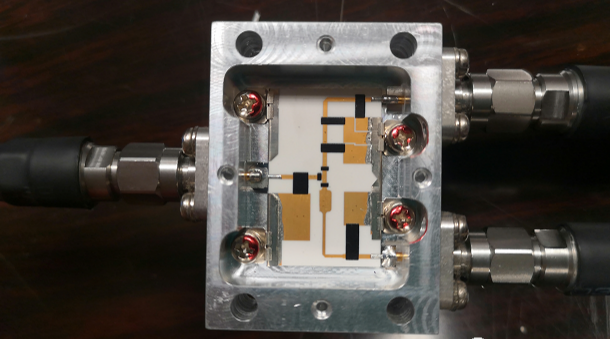
What is Power Divider’s Amplitude Balance?
Amplitude balance refers to the degree of deviation between the signal amplitudes (or powers) at the output ports of a power divider. An ideal power divider (such as a two-way equal splitter) should distribute the input signal equally to each output port. For example, if the input power is 10 dBm, theoretically each of the two output ports should be 7 dBm (considering a 3 dB splitting loss), at which point the amplitude balance is 0 dB. However, in practical applications, the amplitude differences among the output ports represent amplitude imbalance, usually expressed as the ‘maximum difference.’ For example, if the power at the two output ports of a two-way equal splitter is 7.2 dBm and 6.8 dBm respectively, the amplitude imbalance is 0.4 dB.
The amplitude imbalance of a typical RF power splitter needs to be controlled within a certain range (e.g., ±0.5dB, ±1dB), depending on the system requirements — high-precision systems (such as phased array radar) require stricter control (within ±0.3dB), while ordinary communication systems can relax it to ±1.5dB.
Amplitude balance directly affects the uniformity of signal distribution and is particularly critical in the following scenarios:
1. In a power combining system, if the output amplitudes of the power divider are unbalanced, the signals from multiple branches will experience ‘vector addition loss’ due to amplitude differences during combining, reducing the combining efficiency. For example, in the T/R components of a phased array antenna, amplitude imbalance in the power divider can cause beam pointing errors or gain reduction.
2. In multi-channel receiving systems, such as diversity reception and MIMO systems, inconsistent signal amplitudes across channels can affect demodulation accuracy and lead to a decrease in the signal-to-noise ratio (SNR).
In practice, amplitude imbalance in power dividers mainly originates from design and manufacturing deviations:
Structural asymmetry: inconsistent lengths and widths of branch transmission lines (such as microstrip lines and waveguides) in asymmetric power dividers cause differences in loss across different paths (e.g., microstrip width errors can alter the characteristic impedance, introducing additional attenuation).
What is Power Divider’s Phase Balance?
Phase balance determines the ‘time synchrony’ of the signal, which is crucial in systems that rely on phase information:
1. In radar ranging and direction-finding systems, the signal phase difference is directly used to calculate the target distance or angle. Phase imbalance in the power divider can introduce measurement errors. For example, phased array radars achieve beam scanning by controlling the phase of each array element. If the power divider has phase imbalance, it will lead to a decrease in beam pointing accuracy.
2. In coherent demodulation (such as PSK or QAM modulation), phase consistency among the channels is a prerequisite for correct demodulation. Phase imbalance can cause constellation shifts and increase the bit error rate.
The core of phase imbalance is the ‘difference in electrical length of each output path,’ and the specific factors include:
The branch transmission lines (such as microstrip lines or coaxial cables) of a power divider with transmission line length deviations have inconsistent physical lengths, resulting in differences in electrical length (phase is proportional to length: l is length, λ is wavelength). For example, a 1 mm length error at 10 GHz can introduce about a 12° phase difference.
Dielectric property non-uniformity: deviations in the dielectric constant of the dielectric substrate will change the wave velocity of the transmission line; even if the physical length is the same, the electrical length will be different, leading to phase differences.
Port matching errors: inconsistent impedance matching of each output port (such as differences in port VSWR) can cause different signal reflection phases, indirectly affecting the output phase.
The Correlation and Optimization of Amplitude Balance and Phase Balance
Amplitude balance and phase balance are not completely independent; they are usually influenced by the same factors (such as structural asymmetry and process errors) and need to be optimized together:
1. Design-level optimization
- Symmetrical structure design: Use a strictly symmetrical branch topology (such as the symmetrical microstrip line structure of a Wilkinson power divider) to ensure that the physical parameters (length, width, dielectric) of each output path are consistent.
- Broadband compensation design: In broadband power dividers, reduce amplitude and phase deviations across different frequency bands by adding matching networks (such as stepped impedance transformers) or phase compensation lines.
2. Process-level control
- High-precision machining: Use photolithography (for microstrip power dividers) or CNC machining (for waveguide power dividers) to control transmission line dimension errors at the micron level (e.g., ±0.01 mm), reducing length and width deviations.
- Material consistency selection: Choose substrates with high dielectric constant uniformity (such as ceramic substrates) to minimize imbalances caused by differences in dielectric properties.
3. Testing and calibration
- Vector Network Analyzer (VNA) testing: Measure the amplitude (S21, S31) and phase (∠S21, ∠S31) of each output port with a VNA, and directly calculate amplitude imbalance (|S21 – S31|) and phase imbalance (|∠S21 – ∠S31|).
- Calibration compensation: In high-precision systems, imbalances can be corrected using external attenuators (to compensate amplitude) or phase shifters (to compensate phase).
Indicator Requirements for Typical Application
Different RF systems have significant differences in their requirements for amplitude and phase balance, as illustrated below:
|
|
|
|
|
|---|---|---|---|
|
|
|
|
|
|
|
|
|
|
|
|
|
|
|
|
|
|
|
|