Newsroom
Power Amplifier Basics: Types, Classes & Applications
A power amplifier is an electronic amplifier designed to increase the power amplitude of a given input signal. The power of the input signal is increased to a level sufficient to drive the load of output devices such as speakers, headphones, and RF transmitters. Unlike voltage/current amplifiers, power amplifiers are designed to directly drive the load and are used as the final module in the amplification chain.
The input signal to a power amplifier must be above a certain threshold. Therefore, instead of directly passing the raw audio/RF signal to the power amplifier, it is first pre-amplified using a current/voltage amplifier, and then sent as input to the power amplifier after necessary modifications. You can observe the block diagram of an audio amplifier and the usage of a power amplifier below.
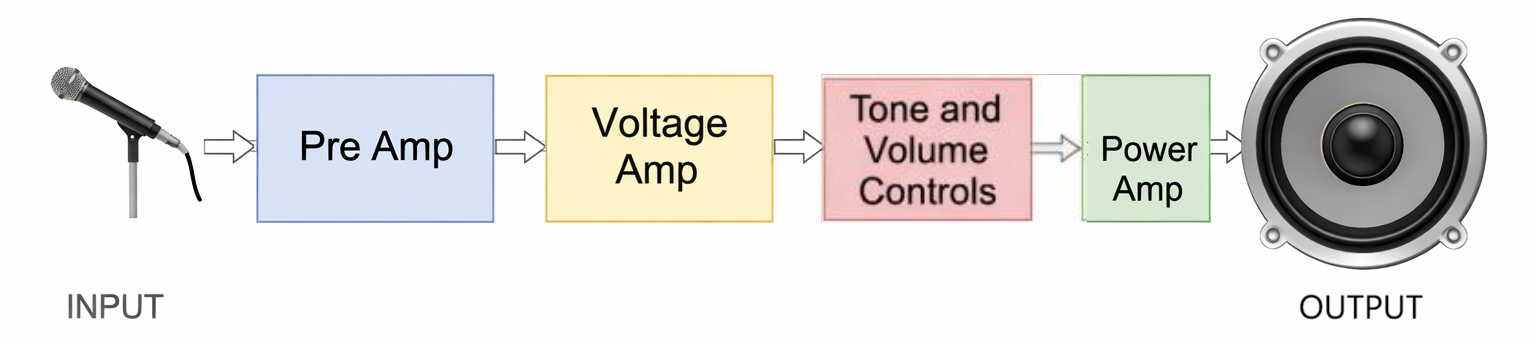
In this configuration, the microphone serves as the input source. The signal strength from the microphone is insufficient for the power amplifier. Therefore, it is first pre-amplified, and then its voltage and current are slightly increased. The signal then passes through tone and volume control circuitry, aesthetically adjusting the audio waveform. Finally, the signal passes through the power amplifier, whose output is fed to the speaker.
Types of Power Amplifiers
Based on the type of output device connected, power amplifiers are classified into the following three types:
- Audio Power Amplifiers
- RF Power Amplifiers
- DC Power Amplifiers
Audio Power Amplifiers
This type of power amplifier is used to increase the power of weaker audio signals. Amplifiers used in speaker driver circuits in televisions, mobile phones, etc., fall into this category. The output range of audio power amplifiers ranges from a few milliwatts (such as headphone amplifiers) to several kilowatts (such as power amplifiers in Hi-Fi/home theater systems).
RF Power Amplifiers
Wireless transmission requires modulated waves to be transmitted over long distances through the air. Antennas are used to transmit the signal, and the transmission range depends on the power of the signal fed to the antenna. For wireless transmissions such as FM radio, the antenna requires an input signal with a power of several thousand kilowatts. Here, an RF power amplifier is used to increase the power amplitude of the modulated wave to a level sufficient to achieve the required transmission distance.
DC Power Amplifiers
DC power amplifiers are used to amplify the power of PWM (Pulse Width Modulation) signals. They are used in electronic control systems that require high-power signals to drive motors or actuators. They take input from a microcontroller system, amplify its power, and feed the amplified signal to the DC motor or actuator.
Power amplifiers
There are various methods for designing power amplifier circuits. Each circuit configuration has different operating and output characteristics. To distinguish the characteristics and performance of different power amplifier circuits, power amplifier classes are used, which are assigned letter symbols to identify the operating method. They are broadly divided into two categories. Power amplifiers designed for amplifying analog signals belong to classes A, B, AB, or C. Power amplifiers designed for amplifying pulse-width modulation (PWM) digital signals are located below D, E, F, etc. The most commonly used power amplifiers are those used in audio amplifier circuits, which belong to classes A, B, AB, or C. Therefore, let’s take a closer look at them.
Class A power amplifier
Analog waveforms consist of positive highs and negative lows. In this type of amplifier, the entire input waveform is used during the amplification process. A single transistor is used to amplify both the positive and negative halves of the waveform. This simplifies their design and makes Class A amplifiers the most commonly used type of power amplifier. Although this type of power amplifier has been superseded by better designs, it remains popular among hobbyists.
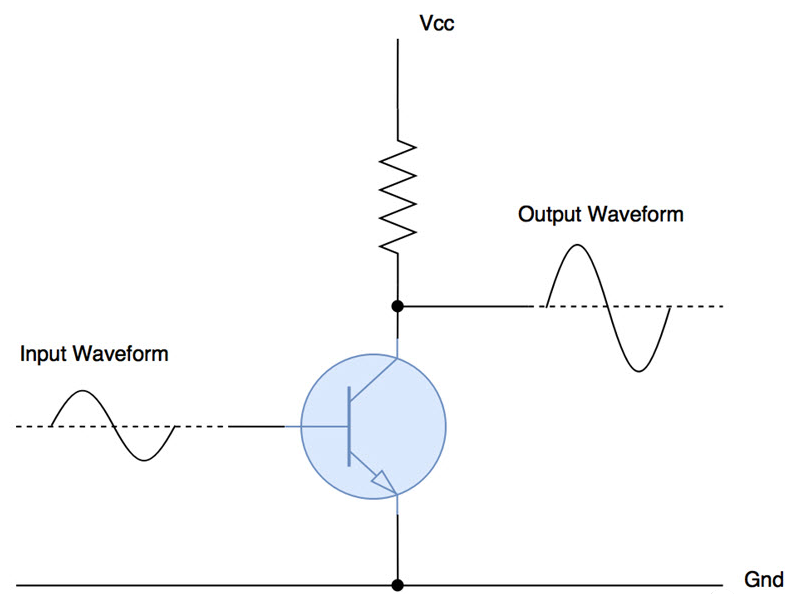
In this type of amplifier, the active components (the electronic components used for amplification, in this case, transistors) are always in use, even when there is no input signal. Under normal configuration, this generates a significant amount of heat and reduces the efficiency of the Class A amplifier to 25%, and to 50% in a transformer-coupled configuration. The conduction angle (the portion of the waveform used for amplification in a 360-degree configuration) of a Class A amplifier is 360°. Therefore, the level of signal distortion is very low, providing better high-frequency performance.
Class B power amplifiers
Class B power amplifiers are designed to reduce the efficiency and heat generation issues present in Class A amplifiers. These amplifiers use two complementary transistors, instead of a single transistor, to amplify the entire waveform. One transistor amplifies the positive half of the waveform, and the other amplifies the negative half. Therefore, each active device conducts half (180°) of the waveform, and when both are on, the entire signal is amplified.
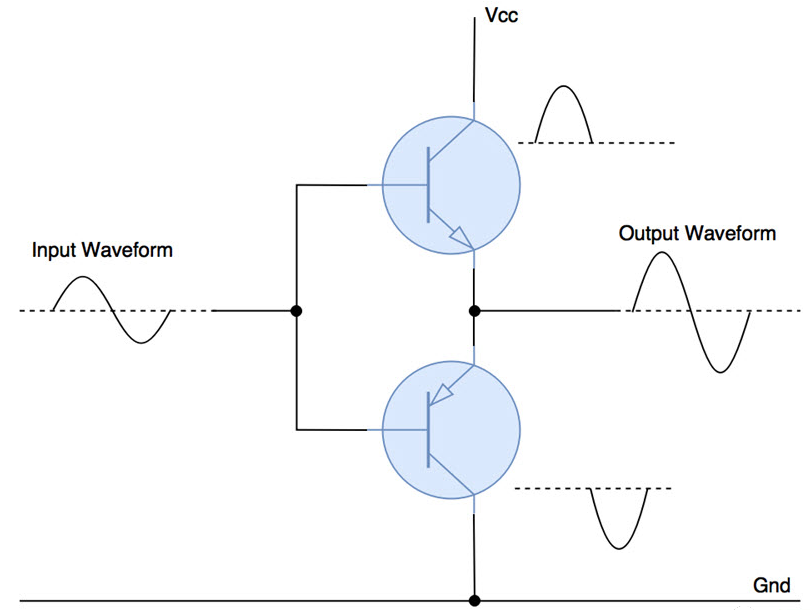
Because of the use of two transistors, Class B amplifiers offer significantly higher efficiency compared to Class A amplifiers. They can achieve approximately 75% of the theoretical efficiency. These power amplifiers are used in battery-powered devices such as FM radios and transistor radios. Due to the overlap of the two halves of the waveform, a small amount of distortion exists in the crossover region. To reduce this signal distortion, Class AB amplifiers were designed.
Class AB power amplifiers
Class AB amplifiers are a combination of Class A and Class B amplifiers. These amplifiers are designed to reduce the inefficiency of Class A amplifiers and the signal distortion in the crossover region of Class B amplifiers.
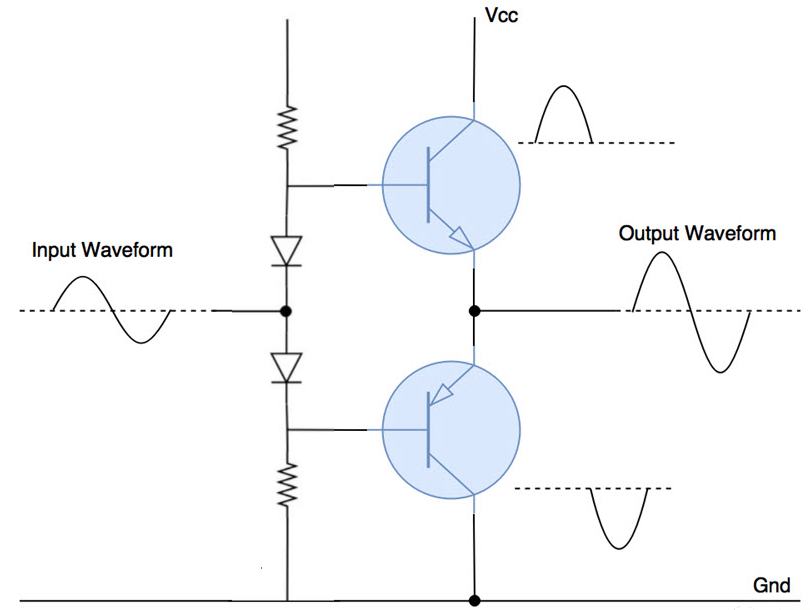
It can maintain a high-frequency response like a Class A amplifier and good efficiency like a Class B amplifier. A combination of diodes and resistors is used to provide a very small bias voltage, thereby reducing waveform distortion near the crossover region. Therefore, the efficiency is slightly reduced (60%).
Class C Power Amplifier
Class C power amplifiers are designed for higher efficiency, but at the cost of reduced linearity/conduction angle (below 90°). In other words, amplification quality is sacrificed for increased efficiency. A smaller conduction angle means greater distortion, making these amplifiers unsuitable for audio amplification. They are used for amplifying high-frequency oscillators and radio frequency signals. Class C amplifiers typically include a tuned load that filters and amplifies the input signal at a specific frequency, while suppressing waveforms at other frequencies.
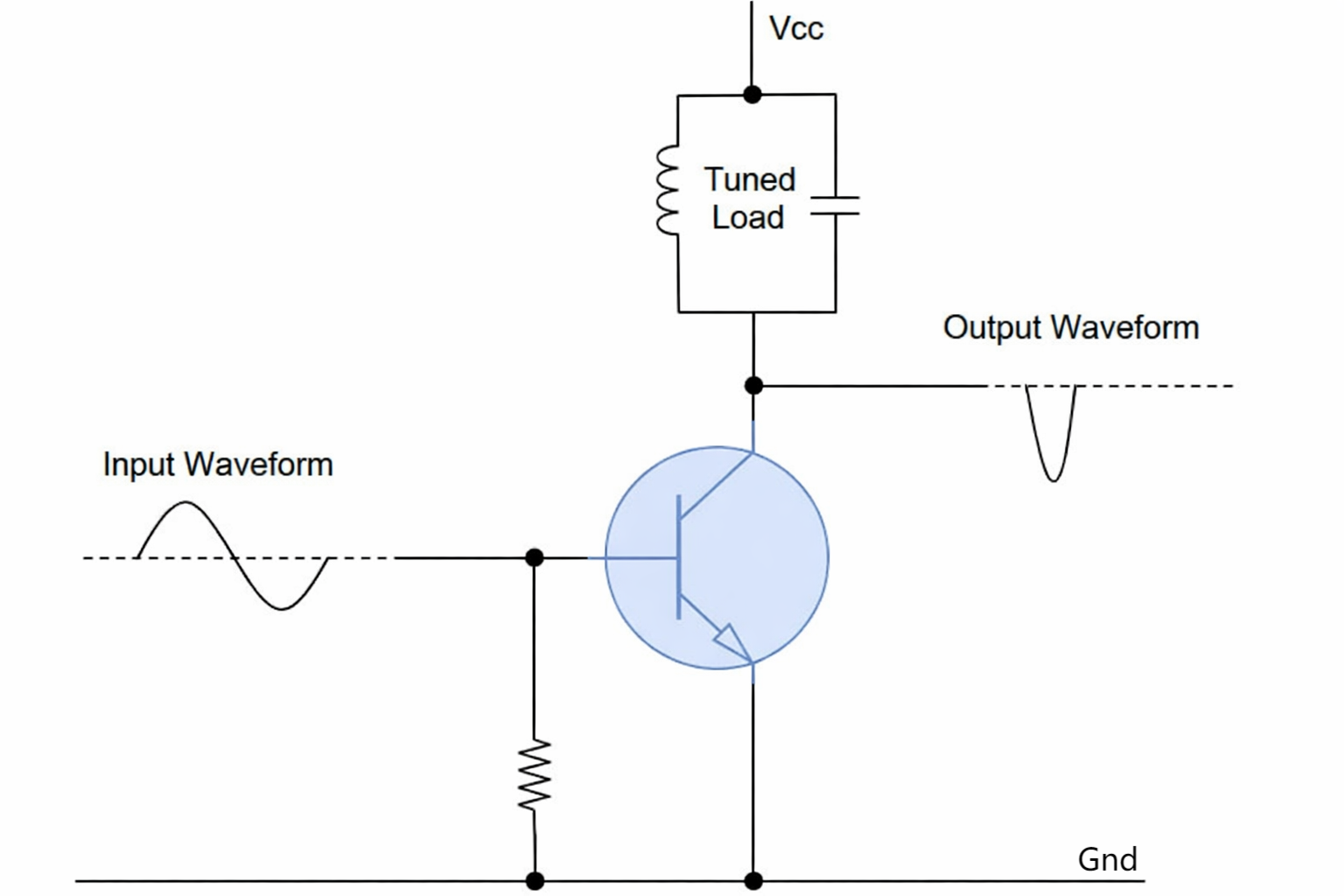
In this type of power amplifier, active components only conduct when the input voltage is above a certain threshold, thereby reducing power consumption and improving efficiency.
Other power amplifier types
Power amplifiers D, E, F, G, etc., are used to amplify PWM-modulated digital signals. They belong to the category of switching power amplifiers, which can continuously turn the output on or off without any other level in between. Due to this simplicity, power amplifiers in this category can achieve a theoretical efficiency of up to (90-100)%.
Application
Here are some applications of power amplifiers in different fields:
- Consumer Electronics: Audio power amplifiers are used in almost all consumer electronic devices, from microwave ovens, headphone drivers, televisions, mobile phones, and home theater systems to theater and concert enhancement systems.
- Industry: Switching power amplifiers are used to control most industrial actuator systems, such as servos and DC motors.
- Wireless Communications: High-power amplifiers are crucial for transmitting cellular or FM radio signals to users. Power amplifiers enable higher power levels, thereby increasing data transmission rates and availability. They are also used in satellite communication equipment.
Conclusion
In today’s increasingly connected world, power amplifiers play a critical role in ensuring stable, efficient, and high-quality signal transmission across a wide range of applications—from wireless communication and satellite systems to radar and test equipment. Choosing the right power amplifier requires not only a clear understanding of performance parameters, but also a reliable partner who can deliver consistent quality and tailored solutions.
At ZR Hi-Tech, we specialize in the design and manufacturing of high-performance RF components, including power amplifiers engineered to meet the demanding requirements of modern communication and electronic systems. Whether you are working on aerospace, defense, telecom, or RF testing applications, our team is ready to support you with customized solutions and fast response.
If you’re looking to enhance your system performance or explore the right power amplifier for your project, feel free to contact ZR Hi-Tech today. Let’s work together to power your next innovation.