Newsroom
If I Add a Low Noise Amplifier, Will My Signal Truly Improve?
You may encounter this issue during RF reception, spectrum monitoring, or weak‑signal experiments. You can see a signal on the spectrum analyzer. Yet it is nearly buried under the noise floor. In this scenario, one intuitive idea comes to mind. Can adding a low noise amplifier (LNA) at the front end “rescue” this weak signal?
The answer is: it’s possible, and it can be quite noticeable in the right receiving chain; but it’s not as simple as just ‘boosting 20 dB makes the signal 20 dB better’. What really matters is the noise figure, gain distribution, and dynamic range of the whole receiving system.
ZR Hi-tech’s LT-LA series covers different application scenarios like low-noise amplification in labs and antenna preamplification. So, what actually happens when you really add a low-noise amplifier into the receiving chain?
Why Does a Weak Signal “Disappear”?
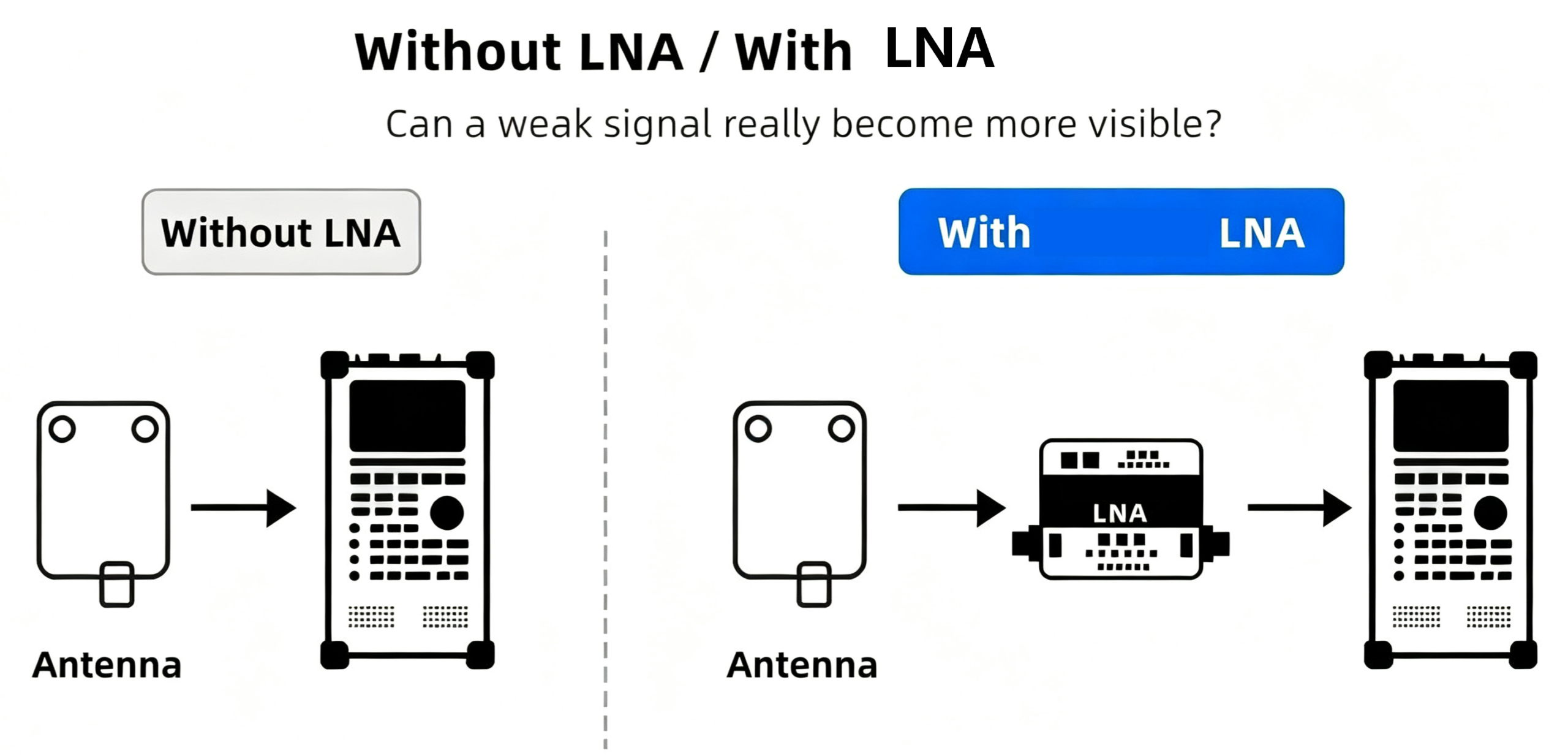
Suppose we’re looking at a very weak wireless signal. The connection is simple: antenna → coaxial cable → spectrum analyzer. If the signal itself is strong enough, of course we can see it directly.
But as the signal gets weaker, it will eventually get closer to the noise floor of the spectrum analyzer itself. At this point, even if the antenna has actually received the signal, the noise generated by the spectrum analyzer’s internal front end, mixer, and IF chain can still drown it out.
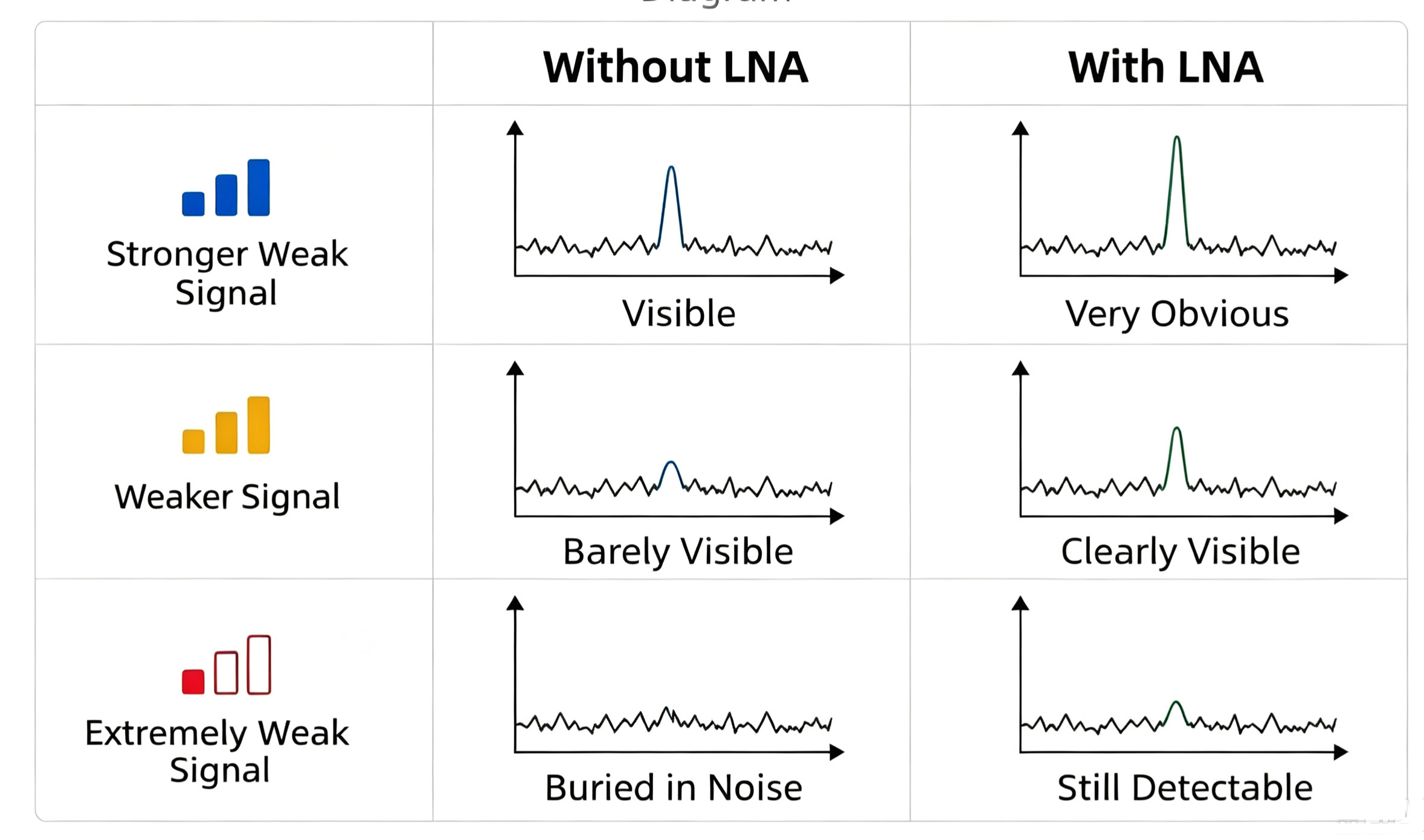
So this kind of state might appear on the screen:
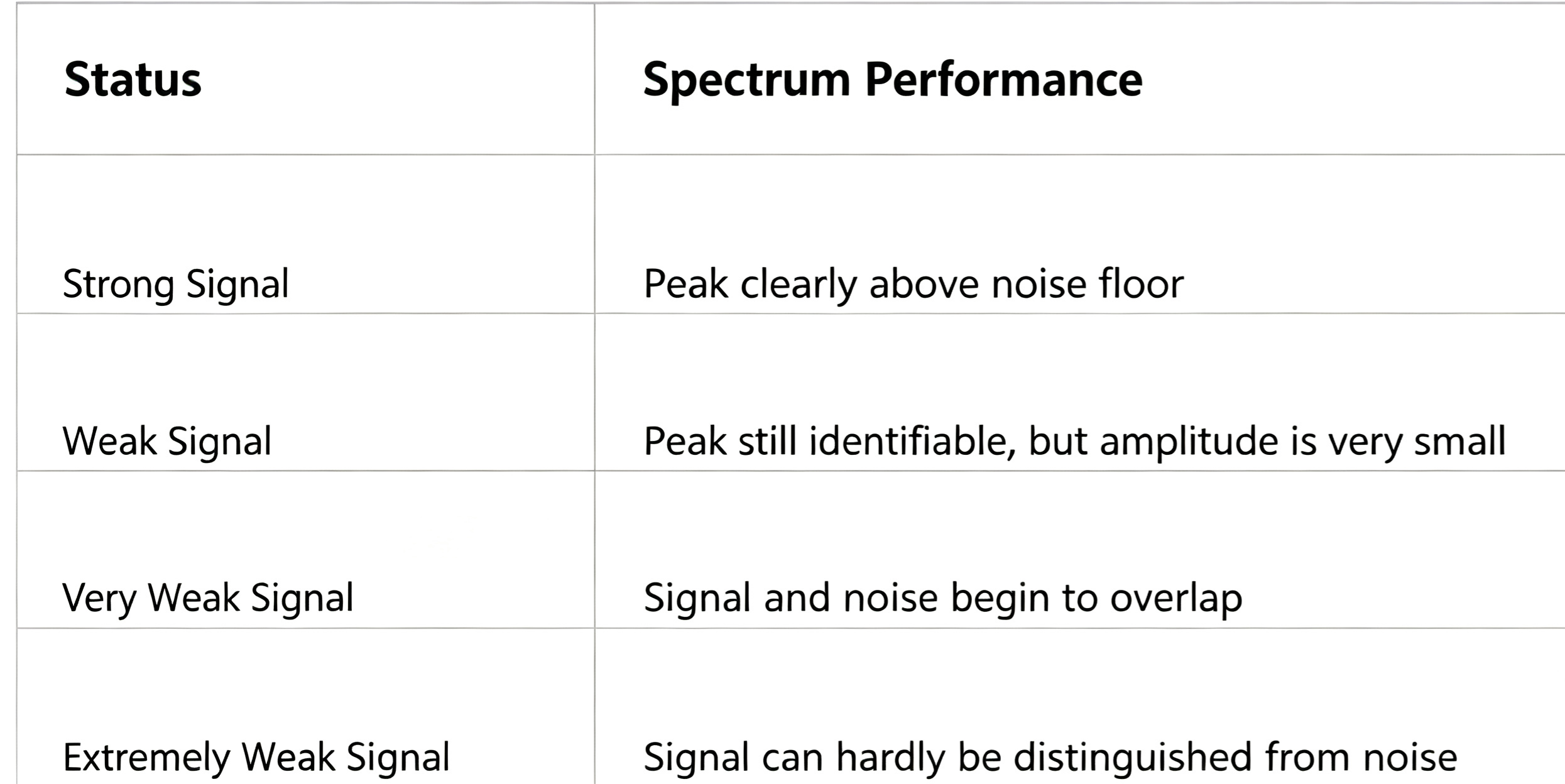
Here’s a really important concept: It’s not that we didn’t get the signal, it’s just that the signal-to-noise ratio of the whole receiving system isn’t enough for the instrument to clearly pick it up.
The noise figure (NF) is an important parameter that measures how much an RF device or receiver system worsens the signal-to-noise ratio; the lower the NF, the better it usually is for receiving weak signals.
What Happens If You Add a ZR Hi-tech Low Noise Amplifier?
Now change the connection to: Antenna → LT-LA→ Spectrum Analyzer
The purpose of the LT-LA series is to first provide a low-noise preamplification before weak signals enter the spectrum analyzer or receiver. This step is really important.
Because if you can provide enough gain at the very front of the system with low additional noise, then the noise from the later-stage instruments will have much less impact on the whole system.
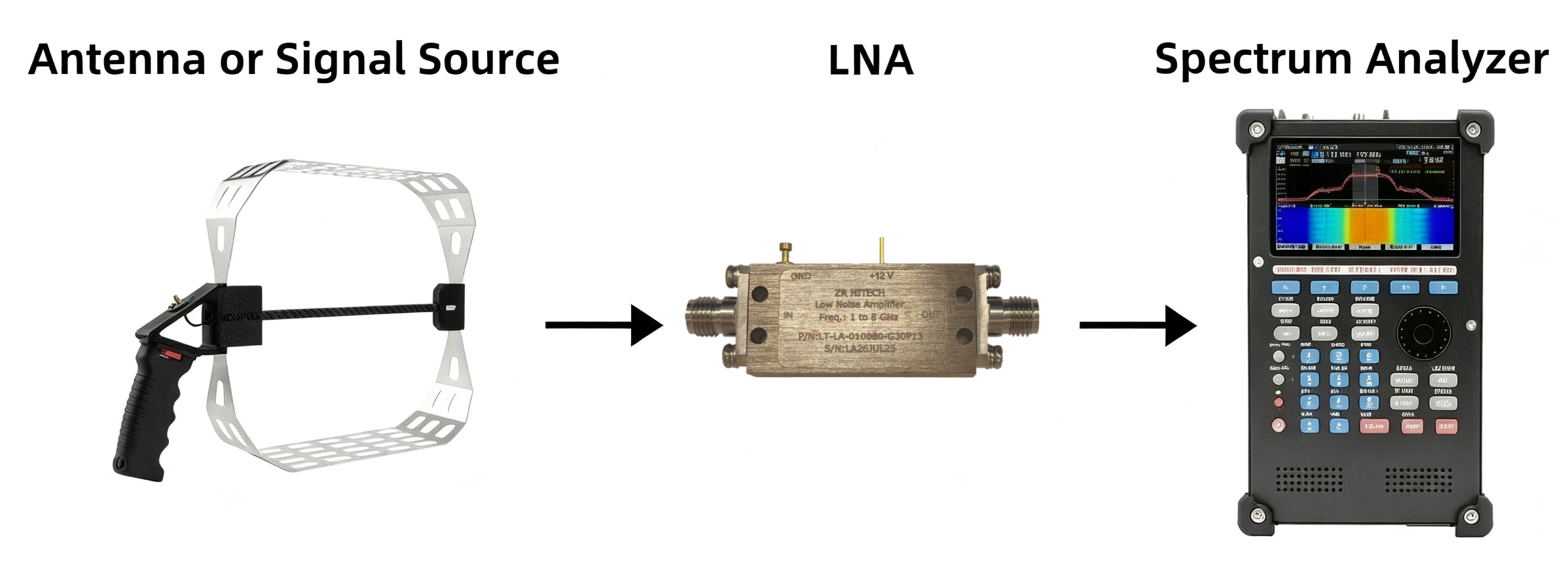
That is:‑110 dBm →‑90 dBm. In other words, the later circuits inside the spectrum analyzer no longer process the original tiny‑110 dBm signal directly. Instead, they work with a higher‑level signal amplified by the preceding LNA stage.

Before And After Comparison: What Should You Really Be Looking At?
Suppose there was originally a weak signal that was almost buried in the noise floor. Without using an LNA: the original signal → instrument front end → internal noise starts to become the main limiting factor; the weak peak on the screen might only be a few dB high, or even completely lost in the noise fluctuations.
After adding an LT-LA series: the original signal → low-noise, high-gain preamplifier → instrument front end. At this point, the target signal and noise at the antenna get about 20 dB of gain first, and the noise generated by the spectrum analyzer itself becomes much less significant compared to the front-end signal.
So when judging whether an LNA is effective, don’t just ask, ‘Has the noise floor decreased?’ A more accurate question should be, ‘Can the target signal that used to be buried in noise now stand out above the noise more reliably?’
Are Weak Signals Really Easier to Detect?
Under the right application conditions, the answer is yes.
Especially when the system is originally limited mainly by the noise of the subsequent receiver or the spectrum analyzer itself, a low-noise figure (NF) preamplifier with appropriate gain can significantly reduce the equivalent noise figure of the entire receiving system.
This is exactly where LNAs are most valuable, but it’s important to emphasize: an LNA itself does not improve the original signal-to-noise ratio (SNR) that has already reached its input. Any real amplifier will add some noise, so looking just at the LNA’s input and output, the SNR will at best stay roughly the same or slightly decrease—it won’t increase out of nowhere.
What it really improves is the overall “antenna-feedline-receiver” system’s reception capability, because it boosts the weak signal to a high enough level that the noise generated by the subsequent stages no longer dominates.
Where The Low Noise Amplifier is Installed Is Just as Important as Whether There’s an LNA
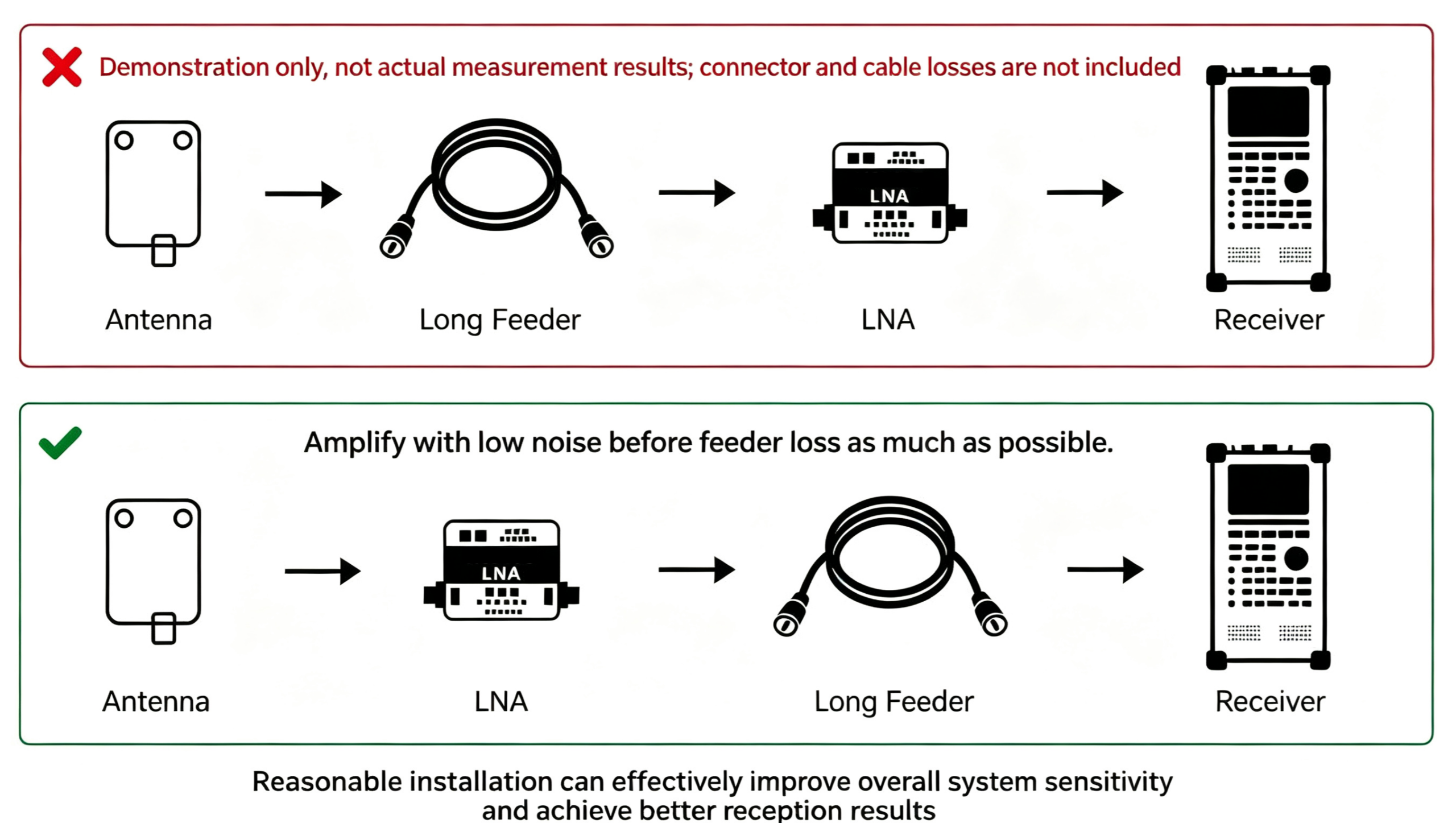
This is also one of the easiest mistakes to make in many receiving systems. Suppose there’s a long coaxial cable with high loss, and the connection is: antenna → long feedline → LNA → receiver.
So weak signals have already lost some energy along with the feedline before even entering the LNA. At this point, amplification can only boost the remaining signal after the loss. A better approach would be: Antenna → LNA → long feedline → receiver.
In other words, try to complete low-noise amplification before any loss occurs.
So, If You Add a Low Noise Amplifier, Will The Signal Actually Get Better?
But the premise is: the LNA’s frequency range is suitable, its noise figure is low enough, the gain is reasonable, it’s not entering compression, and it’s installed close enough to the front end of the receiving chain. So a truly meaningful before-and-after test shouldn’t just snap two spectrum charts and say, ‘Look, the signal is 20 dB higher.’
What’s even more worth observing is: where was the original signal? Where is the signal after adding the LNA? How has the noise floor changed? Has the weak signal that was originally hidden in the noise appeared? And what happens to the spectrum when the gain is too high or connections are wrong?
Only after answering all these questions can you truly say whether this low-noise amplifier actually made your receiving system any better.
Conclusion
LNAs are practical for RF weak‑signal testing and monitoring, but they have limitations. They cannot improve the SNR of over‑the‑air antenna‑received signals. When mounted at the front‑end before cable loss, ZR Hi‑tech LT‑LA series LNAs amplify faint signals and mitigate noise from downstream receivers or spectrum analyzers, revealing signals originally buried in noise. Real‑world performance relies on noise figure, gain, dynamic range and installation location.
LNA performance degrades severely if placed after long lossy feedlines. Avoid judging performance merely by higher displayed signal levels. Verify weak‑signal distinguishability and ensure linear operation. With correct selection and placement, LT‑LA LNAs lower system equivalent noise figure and improve weak‑signal detection. Contact ZR Hi‑tech for your LNA requirements.