Newsroom
Power Divider vs. Power Splitter: How to Get It Right
A power divider is a commonly used passive device in radio frequency (RF) circuits, typically used to split an RF signal in two. The T-type and Wilkinson-type power dividers are two commonly used types. The term “power divider” is short for “power splitter,” but dictionaries also provide another translation: “power splitter.”
And in English, there are indeed both power dividers and power splitters. So how do we distinguish between these two devices? Let’s learn about it together today.
What is Power Divider?
The power dividers most of us are familiar with are power dividers, such as T-type power dividers, which have the same impedance at all three ports, and each port is matched to 50 ohms through an impedance transformer. This allows any port to be used as an input port, and the insertion loss between any two ports is 6dB.
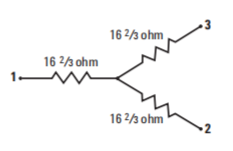
A power divider splits a signal into two equal parts for easy comparison measurements. It provides good impedance matching at both output ports. It can also be used to measure two output signals of different characteristics, such as frequency and power. Furthermore, the power divider can be used to combine two signals because the ports are bidirectional.
What is Power Splitter?
The Power Splitter also divides the power into two equal parts. Unlike the Power Divider, which has three built-in 16.7-ohm resistors, it has two built-in 50-ohm resistors. Furthermore, only the input port of the Power Splitter is matched to 50 ohms; the two output ports have an impedance of 83.33 ohms. This allows the output ports to achieve a VSWR of 1:1. Therefore, the Power Splitter can be called a power splitter, used to improve the matching between the output and the source in level and ratio measurements, thereby minimizing measurement uncertainty.
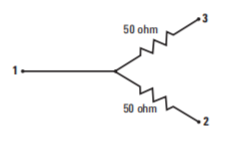
A Power Divider can be used as a power combiner, but a Power Splitter cannot be used in reverse.
Power Divider Application Examples
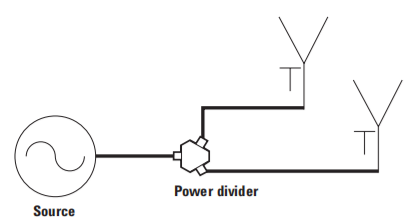
1. Distribute low power to two antennas
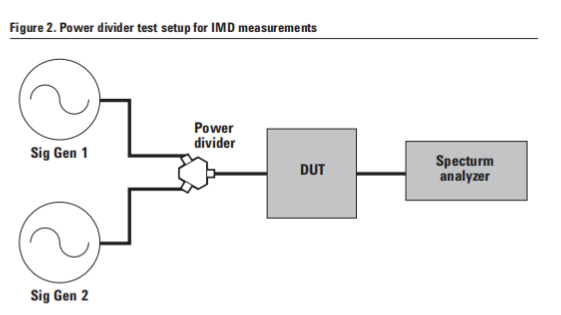
2. Power combining in intermodulation testing
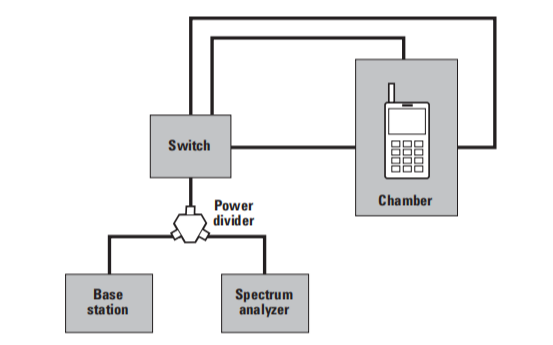
3. Diversity gain measurement
Application examples of Power Splitter
1. Gain, compression, and isolation measurements
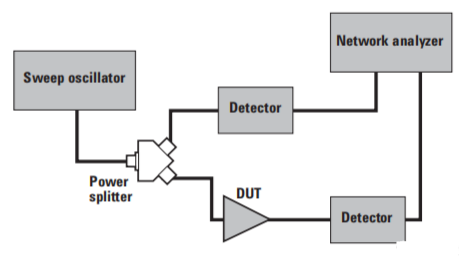
2. Level and ratio measurement
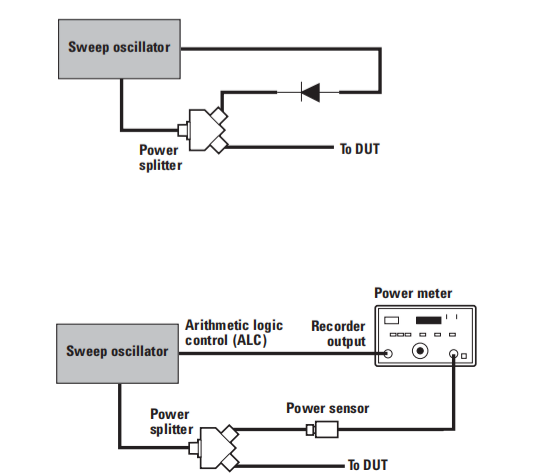
Is this a bit confusing? Here’s a tip from a company regarding device applications:
“The xxx is a DC-to-50 GHz power divider that provides highly accurate power distribution and consolidation capabilities. Superior phase and amplitude tracking ensures precise impedance matching across all three ports, which improves fault location measurements by reducing secondary reflections and intermodulation distortion.”
“The xxx power splitter is a dual-resistor power splitter that provides excellent output standing wave ratio (SWR) on the auxiliary arms when used for signal source level adjustment or ratio measurement applications. The two output arms enable accurate tracking over a frequency range from DC to 67 GHz, allowing users to perform wideband measurements while minimizing uncertainty.”
Conclusion
Although the terms power divider and power splitter are often used interchangeably, they serve different purposes in RF systems. A power divider is designed for balanced signal distribution, good port matching, and bidirectional operation, making it suitable for signal splitting, combining, and general RF system design. In contrast, a power splitter is optimized for measurement accuracy, offering improved output matching and reduced uncertainty in level and ratio measurements.
Understanding these differences is essential when selecting the right component for your application. Whether you are working on antenna distribution, intermodulation testing, or precision measurement setups, choosing the appropriate device directly impacts system performance and measurement reliability.
In RF engineering, there is no one-size-fits-all solution—the key lies in identifying your primary objective, whether it is signal distribution or measurement accuracy. By doing so, you can ensure optimal performance and achieve more precise and reliable results in your RF system.
At ZR Hi-Tech, we provide a wide range of high-performance RF solutions, including power dividers, power splitters, and other passive components tailored for communication, aerospace, and defense applications. Our team supports customized designs to meet specific frequency, power, and integration requirements.
If you’re looking for reliable RF components or need technical support for your next project, feel free to reach out to ZR Hi-Tech — we’re here to help you achieve better performance with confidence. Choosing the right device can make the measurement more accurate, so the key to testing is which indicator of the device under test you are focusing on.