Newsroom
RF Power Amplifier Module Explained: What It Is, How It Works, and How to Choose the Right One
As wireless communications advance with 5G, IoT, and beyond, understanding the RF power amplifier module becomes essential for engineers, system designers, and industry professionals.
This in-depth guide explores everything from the basics to advanced considerations, helping you navigate the complexities of RF power amplifier modules.
What Is an RF Power Amplifier Module?
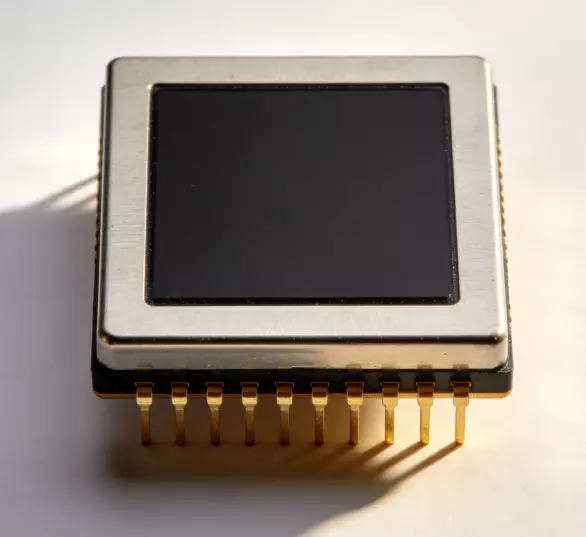
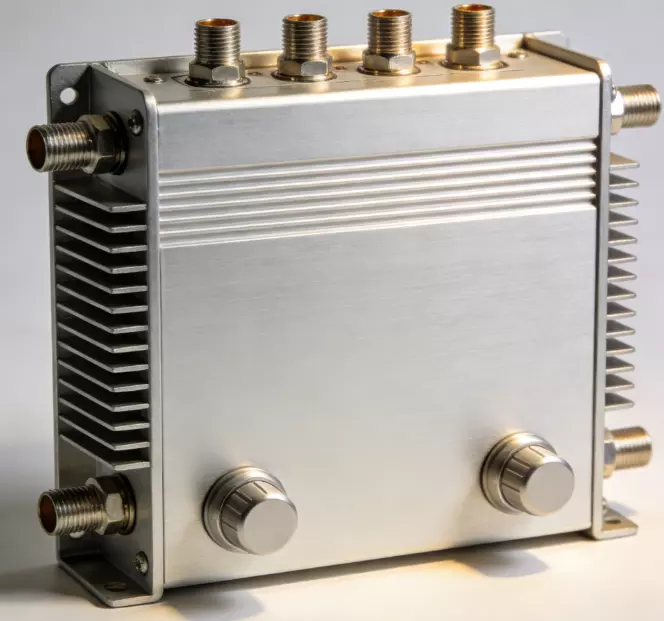
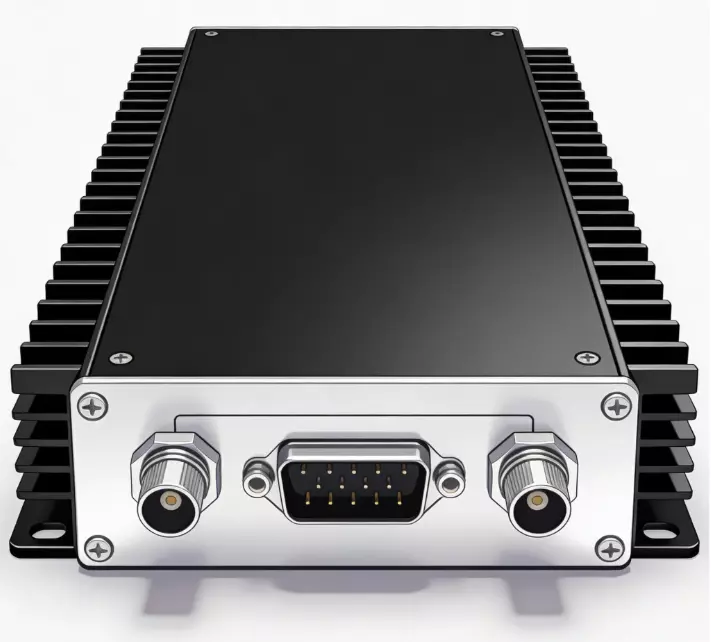
An RF power amplifier module is a compact, integrated electronic assembly designed to increase the power of radio frequency signals. Operating in the RF spectrum—typically from 3 kHz to 300 GHz—these modules are engineered to handle high-frequency signals with minimal distortion and maximum efficiency. At its essence, an RF power amplifier module takes a low-power input signal and amplifies it to drive antennas, transmitters, or other high-power components in communication systems.
Unlike general-purpose amplifiers, RF power amplifier modules are optimized for challenges unique to RF environments, such as impedance matching, harmonic suppression, and thermal dissipation. They often incorporate transistors like gallium nitride (GaN) or gallium arsenide (GaAs), along with passive components such as capacitors, inductors, and resistors, all enclosed in a shielded package to prevent electromagnetic interference (EMI).
The evolution of RF power amplifier modules has been driven by demands for higher data rates and energy efficiency. For instance, in modern applications, these modules must support wide bandwidths and complex modulation schemes like quadrature amplitude modulation (QAM). This integration simplifies system design, reducing the need for external circuitry and accelerating deployment.
Key benefits include ease of use, as they are pre-tuned and matched, making them ideal for both prototyping and production. However, selecting the right module requires considering factors like frequency range, power output, and environmental resilience.
How Does an RF Power Amplifier Module Work?
The functionality of an RF power amplifier module is rooted in semiconductor physics and RF power amplifier circuit design principles. It operates by converting DC power into amplified RF output through active devices, primarily transistors.
The process starts with the input RF signal entering via a matched input port, usually at 50 ohms impedance to minimize reflections. This signal biases the transistor, which could be a metal-oxide-semiconductor field-effect transistor (MOSFET) or a high-electron-mobility transistor (HEMT). The transistor amplifies the signal by controlling current flow from a DC power supply, producing a higher-power version at the output.
Amplification classes dictate the operation mode. For example, in linear classes like Class A, the transistor conducts continuously, ensuring high fidelity but lower efficiency. Switching classes, such as Class E, treat the transistor as a switch for higher efficiency, ideal for constant-envelope signals.
Critical elements include input/output matching networks, which use transmission lines or lumped components to optimize power transfer. Bias circuits maintain the transistor’s operating point, while protection features guard against overdrive or mismatch.
Efficiency is a key metric, calculated as the ratio of RF output power to DC input power. Advanced techniques like envelope tracking or Doherty configurations enhance efficiency by dynamically adjusting power based on signal amplitude. Thermal management is crucial, as inefficiencies convert to heat, potentially degrading performance.
In practice, an RF power amplifier module might amplify a 0 dBm signal to +30 dBm or more, enabling long-range transmission. Understanding these mechanics helps in troubleshooting and optimization.
What Are RF Power Amplifier Modules Used For?
RF power amplifier modules are indispensable in numerous sectors where reliable RF signal boosting is required. The following aspects demonstrate the importance of RF power amplifier.
In telecommunications, they power base stations and repeaters, facilitating cellular networks, Wi-Fi, and satellite links. For 5G deployments, these modules handle millimeter-wave frequencies, overcoming path loss to deliver high-speed data.
In defense and aerospace, RF power amplifier modules drive radar systems, electronic warfare equipment, and avionics, providing the power for detection over vast distances. Broadcasting applications, including TV and radio transmitters, rely on them for clear signal dissemination.
Medical equipment, such as MRI scanners and therapeutic ultrasound devices, uses RF power amplifier modules for precise signal generation. Industrial uses span wireless sensor networks in manufacturing, RFID systems, and even plasma etching in semiconductor production.
Emerging technologies like autonomous vehicles employ them in vehicle-to-everything (V2X) communications for safety-critical data exchange. In space exploration, they ensure reliable uplink/downlink in satellites. The versatility stems from their ability to operate in harsh conditions, from extreme temperatures to high vibrations.
Types of RF Power Amplifier Modules
RF power amplifier modules vary by technology, bandwidth, and application, allowing tailored solutions.
GaN-Based Modules: Gallium nitride offers high power density, efficiency, and wide bandwidth, making it suitable for 5G and radar. GaN handles high voltages, achieving efficiencies over 60% in broadband operations, though costlier.
GaAs-Based Modules: Gallium arsenide provides excellent linearity and low noise for microwave frequencies. Ideal for satellite communications and point-to-point links, GaAs modules excel in applications needing precise signal reproduction but have lower power handling than GaN.
LDMOS Modules: Laterally diffused metal-oxide-semiconductor technology is cost-effective for UHF and L-band, common in base stations. LDMOS offers good efficiency (up to 50%) and ruggedness but is limited in high-frequency performance.
Broadband vs. Narrowband: Broadband modules cover wide frequency ranges (e.g., 1-6 GHz), versatile for multi-band systems like software-defined radios. Narrowband modules focus on specific bands for optimized efficiency and gain, reducing complexity in dedicated applications.
Other classifications include MMIC (monolithic microwave integrated circuit) for integration and hybrid for customization. Choosing depends on trade-offs like cost, size, and performance. ZR offers a range across these types, leading in high-power scenarios.
Key Specifications to Look for in an RF Power Amplifier Module
Evaluating an RF power amplifier module involves scrutinizing specifications that define its suitability.
- Gain: Measured in dB, indicates amplification level (e.g., 20-40 dB).
- Output Power (Psat/P1dB): Saturation power and 1 dB compression point; ensures adequate drive without distortion.
- Efficiency (PAE): Power-added efficiency; higher values (e.g., >50%) reduce operational costs.
- Linearity (IMD3, ACLR): Intermodulation distortion and adjacent channel leakage ratio; critical for multi-carrier signals.
- Noise Figure: Lower values (<5 dB) preserve signal integrity.
- Bandwidth: Frequency range supported.
- VSWR: Voltage standing wave ratio; <1.5:1 for good matching.
- Harmonic Suppression: >40 dBc to minimize interference.
Additional specs include supply voltage, operating temperature (-40°C to +85°C), and package size.
RF Power Amplifier Module vs Discrete RF Amplifier
RF power amplifier modules are pre-integrated units, offering convenience over discrete amplifiers built from individual components.
Modules provide consistent performance, built-in matching, and protections, shortening design cycles. They’re ideal for high-volume production and space-limited designs.
Discrete amplifiers allow customization, potentially higher efficiency through optimized layouts, but demand expertise in PCB design and thermal management. They can be more cost-effective for low quantities but risk variability.
Modules excel in reliability, while discretes suit specialized needs.
Common Problems and Design Challenges
Designing with RF power amplifier modules involves overcoming issues like thermal runaway, where heat causes efficiency drops and failure; mitigated by heatsinks and GaN’s thermal properties.
Linearity-efficiency trade-offs lead to distortion in high-PAPR signals; solutions include predistortion or crest factor reduction. Oscillations from instability require careful grounding and decoupling. Harmonics and spurs necessitate filters, while power supply ripple affects noise. Environmental factors like humidity demand hermetic sealing.
How to Choose the Right RF Power Amplifier Module
Power amplifier selection begins with defining requirements: frequency, power, and environment. Assess specs against needs—prioritize efficiency for portable devices.
Compare technologies: GaN for power, GaAs for linearity.
Consider integration: Modules for simplicity.
Budget, RF power amplifier module manufacturer support, and certifications matter. Prototype testing validates choices. We ZR Hi–Tech provides consultation and custom options to ensure the perfect fit.
Conclusion
RF power amplifier modules are the backbone of RF systems, evolving to meet future demands. By grasping their types, specs, and challenges, you can select optimally. Trust ZR Hi-Tech for innovative, reliable solutions that power your projects forward. Just contact us.