Newsroom
How RF Power Amplifiers Are Used in Military Communication Systems
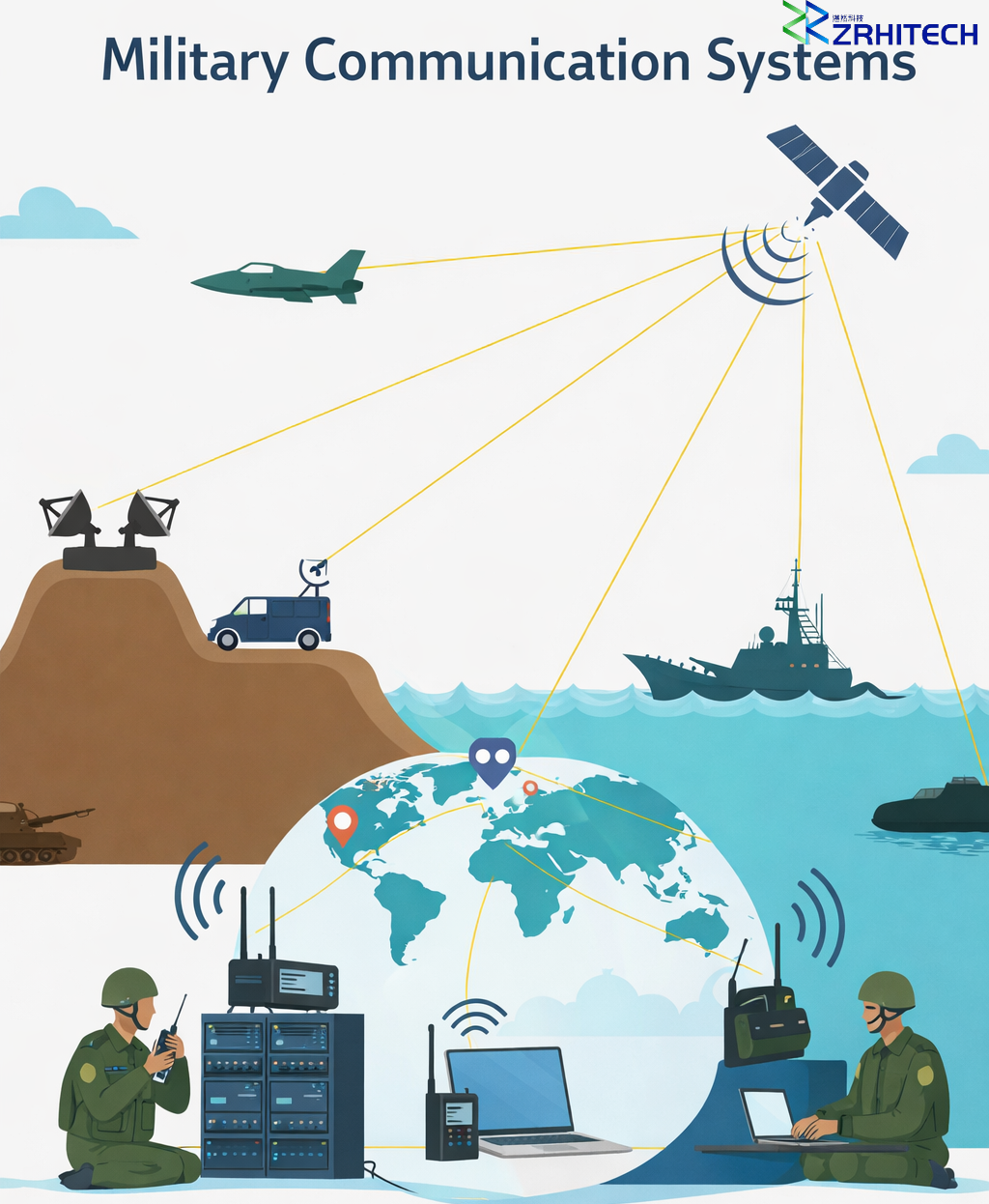
The RF power amplifier application in the field of communication has been introduced in the previous article. Today, I will introduce to you in military communication systems. Modern military communication systems rely heavily on reliable and high-performance radio frequency (RF) technologies. Whether it is secure battlefield communication, satellite links, or radar systems, maintaining strong and stable signal transmission is essential. One of the key components that makes this possible is the RF power amplifier (PA). By boosting weak RF signals to higher power levels, RF power amplifiers ensure that communication signals can travel long distances while maintaining signal quality and reliability.
This article explores how RF power amplifiers are used in military communication systems, the key performance requirements for these applications, and why advanced amplifier technologies are essential for modern defense electronics.
The Role of RF Power Amplifiers in Military Communication
In any RF communication system, signals generated by transmitters are usually very weak and cannot travel long distances on their own. RF power amplifiers increase the power level of these signals before they are transmitted through antennas, enabling reliable communication across large distances and in challenging environments.
In military systems, the role of RF power amplifiers is even more critical. Communication often takes place in harsh environments where signals must overcome long distances, interference, and potential electronic countermeasures. High-performance power amplifiers ensure that signals remain strong, clear, and resistant to disruption.
Key Military Applications of RF Power Amplifiers
1. Tactical Radio Communication
One of the most common uses of RF power amplifiers in military systems is tactical radio communication. Soldiers, vehicles, and command centers rely on radio communication to coordinate operations in real time.
Power amplifiers enable these radios to transmit signals over long distances while maintaining signal integrity. In battlefield environments where terrain obstacles and interference are common, higher transmission power helps ensure reliable connectivity between units.
2. Satellite Communication (SATCOM)
Military forces rely heavily on satellite communication systems for global connectivity. SATCOM allows secure communication between ground forces, ships, aircraft, and command centers across continents.
RF power amplifiers are essential components in satellite uplink systems. They boost RF signals before transmission to satellites in orbit, ensuring that the signals can travel vast distances through the atmosphere and space.
High-frequency bands such as Ku-band and Ka-band are commonly used in military SATCOM systems, and these applications require amplifiers capable of delivering high output power and excellent efficiency.
3. Radar Systems
Radar systems are widely used in defense applications for target detection, surveillance, and navigation. RF power amplifiers play a crucial role in radar transmitters by generating the high-power signals needed for radar pulses.
These signals travel through the air, reflect off objects such as aircraft or ships, and return to the radar receiver. The stronger the transmitted signal, the greater the radar system’s detection range and accuracy.
In modern radar systems, power amplifiers must support:
-
High peak power output
-
Wide frequency bandwidth
-
High reliability under continuous operation
4. Electronic Warfare (EW)
Electronic warfare systems are designed to control or disrupt enemy communication and radar systems. In these systems, RF power amplifiers are used in jamming equipment that transmits high-power signals to interfere with hostile electronic systems.
High-power amplifiers enable electronic warfare systems to generate strong jamming signals that can overwhelm enemy receivers or radar systems, making them ineffective during combat operations.
Because of the demanding nature of electronic warfare, these amplifiers must provide extremely high power levels and operate across wide frequency ranges.
Key Performance Requirements for Military RF Power Amplifiers
Military communication systems require amplifiers that meet strict performance and reliability standards. Some of the most important parameters include:
High Output Power
Military transmitters often require high-power signals to ensure long-range communication and strong signal penetration.
High Efficiency
Efficient amplifiers reduce power consumption and heat generation, which is especially important in mobile or airborne systems.
Excellent Linearity
Modern military communication systems often use complex modulation techniques. High linearity ensures that signals remain undistorted during amplification.
Wide Operating Frequency Range
Military equipment often operates across multiple frequency bands, requiring amplifiers that support wideband performance.
Thermal Stability and Reliability
Military electronics must operate in extreme environments, including high temperatures, vibration, and harsh weather conditions.
Advanced Technologies in Military RF Amplifiers
To meet these demanding requirements, modern military systems increasingly rely on advanced semiconductor technologies.
One of the most important developments is the use of Gallium Nitride (GaN) devices in RF power amplifiers. Compared with traditional silicon technologies, GaN offers several advantages:
-
Higher power density
-
Better efficiency
-
Superior thermal performance
-
Operation at higher frequencies
These characteristics make GaN amplifiers particularly suitable for applications such as radar, satellite communication, and electronic warfare systems.
The Growing Importance of RF Power Amplifiers in Defense Systems
As military communication technologies continue to evolve, the importance of RF power amplifiers will only increase. Emerging technologies such as software-defined radios, advanced radar systems, and next-generation satellite networks all rely on high-performance RF amplification.
In addition, modern defense strategies increasingly emphasize network-centric warfare, where real-time data sharing between platforms is essential. Reliable RF communication enabled by high-performance power amplifiers is a key part of this capability.
Conclusion
RF power amplifiers are indispensable components in modern military communication systems. From tactical radios and satellite communication to radar and electronic warfare systems, these amplifiers ensure that RF signals can be transmitted reliably across long distances and challenging environments.
As defense technologies continue to advance, innovations in amplifier design and semiconductor materials will play a critical role in improving performance, efficiency, and reliability. For engineers working on military communication equipment, understanding the capabilities and applications of RF power amplifiers is essential for building robust and effective systems.
Please contact us and learn more about ZR Hi-tech’s RF power amplifier!